
What is an Inverter Drive: Why Your Business Needs One
If you’ve ever stood in a loud plant room or watched machinery constantly power up and down, you’ll know how hard your systems are working, and how much energy might be slipping through the cracks.
We recently worked with a client who was frustrated by rising energy bills and unnecessary wear on their motors. The solution? Installing an inverter drive.
This is a simple but powerful bit of kit that allowed them to control motor speed more efficiently. Almost immediately, they saw a reduction in energy use and a smoother start-up process across their systems.
So what exactly is an inverter drive?
In short, it’s a device that controls the speed and torque of electric motors by adjusting the frequency and voltage supplied. Instead of motors running full speed constantly (even when they don’t need to), an inverter drive allows for more precision, meaning lower energy costs, longer equipment life, and better control.
For businesses looking to reduce energy consumption, the Carbon Trust’s guide to variable speed drives is a useful starting point for understanding the wider efficiency case.
Inverter Drives and VFD in Commercial Setups
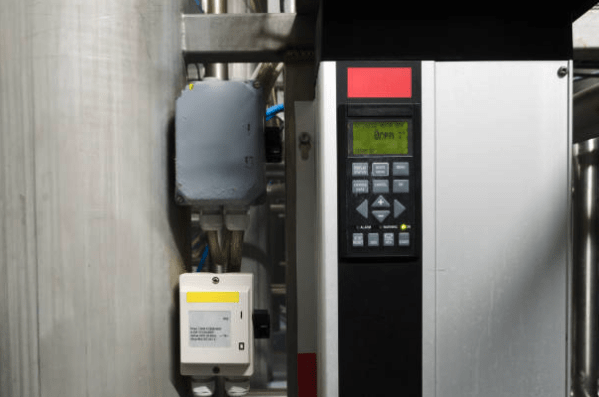
Variable Frequency Drives (VFDs), which are also known as inverter drives are becoming essential in commercial environments where energy efficiency, control, and equipment longevity matter.
From HVAC systems in office buildings to water pumps in warehouses and conveyor systems in manufacturing, VFDs allow motors to run at optimal speeds based on demands, resulting in cutting energy use, reducing wear, and improving performance. In modern facilities, they’re often integrated into Building Management Systems (BMS), helping streamline operations and meet sustainability targets. Whether you’re retrofitting older equipment or planning a new installation, VFDs offer a smart, future-ready solution.
Common applications include:
- HVAC systems
- Pumps and fans
- Conveyor belts
- Any motor-driven commercial machinery
How Does an Inverter Drive Work With a Motor?
To understand why inverter drives are so useful, it helps to understand what they actually do to the motor they are connected to.
Most electric motors, when connected directly to mains power, run at a fixed speed determined by the frequency of the electrical supply. In the UK that is 50Hz, which means the motor spins at whatever speed that frequency produces for its given design. There is no in-between. The motor is either on at full speed or it is off. An inverter drive sits between the mains supply and the motor. It converts the incoming AC power to DC, then converts it back to AC at a frequency and voltage that you control. By adjusting that output frequency, you control the speed of the motor precisely.
Run it at 25Hz instead of 50Hz and the motor runs at roughly half speed, using a fraction of the energy it would at full speed. For a three phase motor, this is especially significant. Three phase motors are the workhorses of commercial and industrial settings, used in pumps, fans, compressors, conveyor systems, and much more.
A 3 phase motor inverter allows these motors to ramp up gradually rather than starting at full load, which dramatically reduces mechanical stress and inrush current at start-up. Over time that means fewer breakdowns, lower maintenance costs, and a longer working life for the motor itself.
The IET provides detailed technical guidance on motor control and wiring regulations for those who want to understand the full compliance picture.
In short, an inverter drive does not just save energy. It makes the motor work smarter, run smoother, and last longer.
How Much Does an Inverter Drive Cost?
This is one of the most common questions we get asked, and the honest answer is that it depends on several factors. That said, it is possible to give a useful sense of what drives the cost.
The drive unit itself varies significantly in price depending on the power rating (measured in kilowatts), the brand, and the specification. A basic single phase drive for a small motor might cost a few hundred pounds. A high-specification three phase drive for a large industrial motor can run into several thousand. For most commercial applications, the drive unit cost sits somewhere in between.
On top of the unit cost, installation involves:
- A site survey to assess the existing motor and electrical infrastructure
- Any upgrades needed to the incoming supply or distribution board
- Physical installation, wiring, and containment
- Programming and commissioning the drive to suit your specific application
- Testing and certification
For most commercial installations, the total cost including supply and installation is recouped through energy savings within a relatively short period. Businesses with motors running continuously, such as pump systems, fans, and refrigeration plant, typically see the fastest payback.
We do not publish fixed prices because every installation is different, but we are always happy to carry out a no-obligation site assessment and provide a clear written quote. That way you can make an informed decision about whether the investment makes sense for your site before committing to anything.
Top Inverter Drives for Commercial and Industrial Use
Variable Frequency Drives (VFDs), which are also known as inverter drives, are becoming essential in commercial environments where energy efficiency, control, and equipment longevity matter.
From HVAC systems in office buildings to water pumps in warehouses and conveyor systems in manufacturing, VFDs allow motors to run at optimal speeds based on demand, resulting in reduced energy use, less wear, and improved performance. In modern facilities, they are often integrated into Building Management Systems (BMS), helping streamline operations and meet sustainability targets. Whether you are retrofitting older equipment or planning a new installation, VFDs offer a smart, future-ready solution.
Choosing the right inverter drive is just the first step, but ensuring compatibility with your existing control systems is crucial for seamless upgrades and maximising performance.
When it comes to choosing the right inverter drive for your commercial electrical needs, several trusted brands stand out for their reliability, efficiency, and advanced features.
Siemens SINAMICS
Known for robust performance in industrial environments. A reliable choice for demanding applications where uptime is critical.
You can explore the full range on the Siemens SINAMICS UK product pages.
Schneider Electric Altivar Series
Praised for its energy-saving capabilities and user-friendly interface, making it a popular choice for facilities teams managing multiple systems.
Full specifications are available on the Schneider Electric UK website.
ABB ACS Series
Offers versatile control options across a wide range of applications. Well suited to commercial and light industrial settings.
More detail on the range is available on the ABB UK website.
Danfoss VLT Drives
Recognised for their compact design and easy integration, particularly useful where space is limited.
The full Danfoss VLT range can be found on the Danfoss UK website.
Yaskawa A1000
Delivers precise motor control and high efficiency. A strong option for applications requiring accurate speed regulation.
Full product information is available on the Yaskawa Europe website.
Selecting the right model depends on your specific application requirements, but these industry leaders provide excellent starting points for commercial systems seeking improved energy efficiency and motor performance.
Choosing the right inverter drive is just the first step. Ensuring compatibility with your existing control systems is crucial for seamless upgrades and maximising performance.
Learn more about our control system upgrades and how we ensure perfect inverter drive compatibility on our Control Panel Services page.
Installing, Repairing, and Upgrading Inverter Drives
We provide expert installation, repair, and upgrading of VFD drives (also known as Variable Frequency Drives or VFDs) to help businesses improve energy efficiency, motor control, and equipment reliability.
Whether you are fitting a new system, troubleshooting faults, or looking to optimise performance, our commercial electricians ensure your inverter drives are configured to meet the unique demands of your setup. From HVAC and pump systems to production lines and conveyors, we deliver tailored solutions that reduce downtime, extend motor life, and save on running costs.
Ready to Make the Switch?
As a specialist in commercial electrical services, we can help you assess whether an inverter drive upgrade fits your site. We can advise on the best units, size your system correctly, and handle professional installation and commissioning.
Already using an inverter drive? We also carry out repairs, fault finding, and upgrades on existing systems. If your drives are ageing, underperforming, or causing downtime, get in touch and we can take a look.
Summary
Inverter drives are one of the most cost-effective upgrades a commercial or industrial business can make. By giving you precise control over motor speed, they reduce energy waste, cut maintenance costs, and extend the working life of your equipment. Whether you are looking at a single motor or a full site upgrade, the efficiency gains are usually significant and the payback period is often shorter than businesses expect.
If you would like to understand whether an inverter drive is right for your setup, our team is happy to talk it through with you.