
What is a Thermographic Inspection?
A plain-English guide for commercial property owners and facilities managers
If you’ve been told you need a thermographic inspection (typically by an insurer, a health and safety officer, or a maintenance contractor) you might be wondering exactly what it involves and why it matters. This guide explains everything you need to know.
The Simple Answer
A thermographic inspection is a non-invasive survey that uses infrared camera technology to detect heat anomalies in electrical systems, mechanical equipment, and building fabric. Because faulty components, loose connections, and failing equipment generate abnormal heat before they visibly break down, thermographic inspections can identify problems that are completely invisible to the naked eye — and to a standard electrical inspection.
In plain terms: it finds problems before they become emergencies.
How Does a Thermographic Inspection Work?
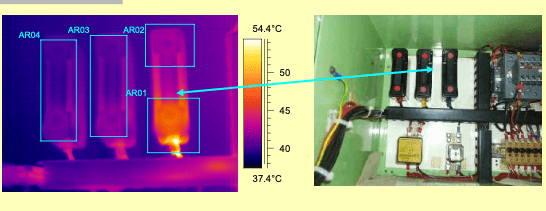
Infrared cameras detect the heat energy emitted by objects. Every electrical component, connection, and piece of equipment has a normal operating temperature. When something starts to fail — a loose connection, an overloaded circuit, a deteriorating component — it generates excess heat. That heat shows up clearly on an infrared camera as a hotspot, even when the system appears to be functioning normally from the outside.
This is why thermographic inspections are carried out while systems are live and under load. Unlike a standard electrical inspection, which requires systems to be isolated, a thermographic survey captures the building in its normal operating state — which is precisely when faults reveal themselves.
What Does a Thermographic Inspection Look For?
A commercial thermographic inspection typically covers:
- Electrical distribution boards and panels — the most common source of heat anomalies in commercial buildings, often caused by loose connections, overloaded circuits, or deteriorating components.
- Switchgear and circuit breakers — checked for signs of excessive resistance and early-stage failure.
- Cable terminations and connections — vibration and thermal stress cause connections to loosen over time, increasing resistance and generating heat.
- Mechanical plant and equipment — motors, pumps, and HVAC systems are inspected for friction, wear, and abnormal heat patterns.
- Building fabric — in some surveys, walls, roofs, and floors are inspected for insulation failures, moisture ingress, and heat loss.
What Is the Difference Between a Thermographic Inspection and a Thermal Imaging Survey?
The two terms refer to the same process.
Thermal imaging survey is the commonly used everyday term that most people recognise.
Thermographic inspection, or thermographic survey is the technically precise, industry-standard terminology used by certified engineers, insurers, and loss adjusters.
If your insurer has requested either, they are asking for the same thing. If you want to know why a thermographic survey is important for insurance, check out this blog post.
Who Needs a Thermographic Inspection?
Thermographic inspections are recommended or required for a wide range of commercial and industrial properties including offices and business premises, warehouses and logistics facilities, data centres, hotels and hospitality venues, retail spaces, schools and educational buildings, healthcare facilities, and manufacturing plants.
Many commercial insurance providers now require regular thermographic inspections as a condition of cover — particularly for properties with high energy demands or significant fire risk. A certified thermographic inspection report provides documented evidence of due diligence and is accepted by major insurers across the UK.
For example, motors consume over 60% of the total electricity used in industrial facilities, according to the International Energy Agency. If those motors are running without inverter drives (VFDs) or proper controls, they could be consuming up to 50% more energy than necessary, particularly in applications like pumps, fans, or conveyors where speed variation is key.
Likewise, old fluorescent or halogen lighting can use up to 80% more power than LED alternatives. And poor power factor correction or overloaded circuits can further increase your demand charges.
In one real-world case, a mid-size warehouse saved over £4,000 annually simply by upgrading its lighting system and fitting inverter drives to its ventilation fans. These types of changes typically pay for themselves within 1–2 years.
If your energy bills have crept up with no clear reason, it’s likely your system isn’t working as efficiently as it should, and every month you delay is more money lost.
The Ecodesign for Energy‑Related Products and Energy Information Regulations 2021 — UK legislation setting minimum energy efficiency requirements for electric motors and variable speed drives sold and used in Great Britain. This includes defined thresholds (e.g., IE efficiency levels) that help improve motor energy performance and reduce waste.
What Happens During a Thermographic Inspection?
The process is straightforward and causes minimal disruption to your operations.
A Level 2 certified thermographer visits your site at a time that suits you. The survey is carried out while systems are live and under normal load — no isolation, no downtime. The thermographer captures infrared and digital images of all inspected systems, documenting every panel, connection, and component. Within 72 hours of the survey you receive a comprehensive written report detailing all findings, with infrared images, risk classifications, and recommended remedial actions.
The whole process for a standard commercial property typically takes between two and four hours.
What Does a Thermographic Inspection Report Include?
A professional thermographic inspection report should include infrared and digital images of all inspected components, clear identification of all heat anomalies detected, risk classification for each finding — typically urgent, advisory, or monitor — recommended remedial actions with priority ratings, and a record of survey conditions including ambient temperature and system load at the time of inspection.
This report is your evidence of compliance for insurance purposes and your action plan for maintenance.
How Often Should You Have a Thermographic Inspection?
For most commercial properties an annual thermographic inspection is the minimum recommended frequency. High-risk environments — data centres, manufacturing facilities, healthcare buildings — benefit from inspections every six months. Your insurer may specify a minimum frequency as a condition of your policy.
The cost of a thermographic inspection is almost always significantly less than the cost of a single unplanned equipment failure, let alone a fire.
Why Does Certification Matter?
Not all thermographers are equal. A Level 2 certified thermographer has the training and expertise to not only capture infrared images but to accurately interpret what they show, distinguishing genuine faults from normal operating heat, understanding equipment behaviour under different load conditions, and providing reliable risk classifications.
Uncertified or lower-level thermographers are more prone to errors that can be costly and potentially hazardous — such as overlooking critical issues or misclassifying the severity of a fault.
Always check the certification level of whoever carries out your thermographic inspection. For insurance purposes, a Level 2 certified report carries significantly more weight.
Need a Thermographic Inspection for Your Commercial Property?
With over 30 years of experience delivering thermographic inspections and thermal imaging surveys for commercial and industrial properties across London, our Level 2 certified thermographers provide detailed, reliable reports within 72 hours.
Whether you need a survey for insurance purposes, as part of a planned maintenance programme, or because you have a suspected fault, we can help.
Find out more about our Thermal Imaging Survey service or call us directly on 020 8455 9020 for a no-obligation estimate.