
Thermal Imaging for Residential Buildings
Living in a residential complex comes with the assurance of safety and comfort, but behind the scenes, complex electrical systems work tirelessly to keep everything running smoothly. Unfortunately, electrical faults can pose serious safety risks, from power outages to dangerous fires.
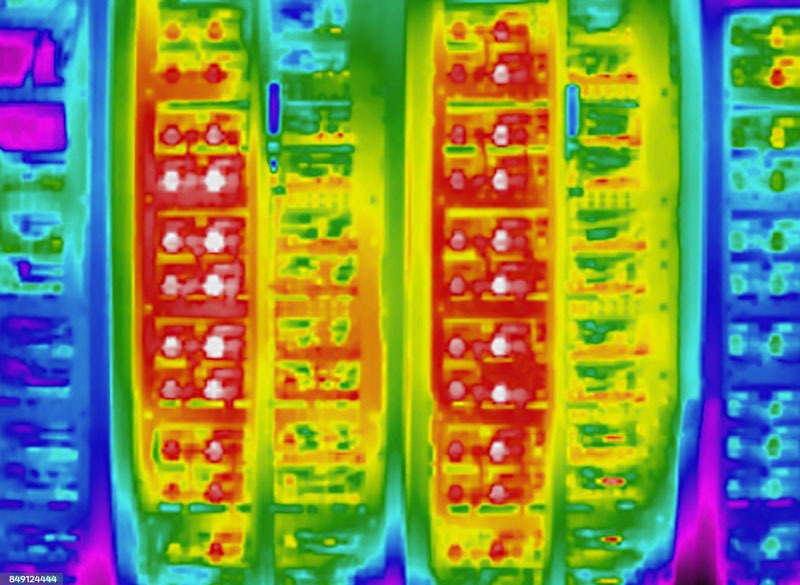
Thermal imaging scans offer a reliable and non-intrusive solution to identifying potential electrical issues before they become major problems. For property managers and landlords in London, investing in regular thermal imaging surveys is essential to maintaining the safety and efficiency of residential complexes.
We’ve carried out electrical thermographic surveys across large residential estates in London, including ongoing work at the Barbican Estate, covering communal distribution boards, riser cupboards, and plant rooms.
Why Residential Complexes Have Specific Electrical Risks
A residential complex presents a different electrical risk profile to a standard commercial building. Multiple dwellings share communal distribution boards, rising mains, and electrical infrastructure that serves dozens or hundreds of residents simultaneously. These systems run continuously under sustained load. Unlike a commercial property that empties overnight, a residential block never fully powers down.
This constant load, combined with ageing infrastructure common in London’s housing stock, creates conditions where electrical faults develop gradually and invisibly. Overloaded circuits, corroded connections and deteriorating switchgear generate heat long before they trigger any visible warning or circuit protection. Standard visual inspections and EICR testing, carried out with systems isolated, cannot detect these active faults.
Thermal imaging surveys are conducted while systems are live and under load, making them the only method capable of identifying heat anomalies in real operating conditions. Electrical Safety First reports that electrical faults account for around half of all accidental dwelling fires in the UK, underlining why proactive inspection matters in residential buildings.
Compliance and Legal Obligations for Residential Complexes
Property managers and responsible persons for residential complexes face a specific set of legislative requirements around electrical safety:
- The Building Safety Act 2022 introduced new obligations for higher-risk residential buildings (over 18 metres or 7 storeys). Duty holders are required to demonstrate ongoing safety management including documented evidence of electrical system condition.
- The [Fire Safety Act 2021 extended the scope of fire risk assessments in multi-occupied residential buildings to include the structure, external walls, and flat entrance doors. Electrical faults are among the leading causes of residential fires in the UK. A thermographic inspection provides documented evidence of proactive risk management.
- 18th Edition Wiring Regulations requires electrical installations to be maintained in a safe condition. For communal areas and shared electrical infrastructure in residential blocks, thermal imaging provides evidence of condition between full EICR inspection cycles.
- Insurance requirements: an increasing number of residential block insurers now require or strongly recommend thermal imaging surveys as a condition of cover, particularly for buildings with ageing electrical infrastructure or a history of claims.
Our thermographic inspection reports are accepted as supporting documentation for fire risk assessments, building safety cases, and insurer requirements.
What a Thermal Imaging Survey Covers in a Residential Complex
A thermal imaging survey for a residential complex typically inspects all communal and shared electrical infrastructure. This includes:
- Rising mains and distribution boards serving communal areas and individual flats
- Main incoming switchgear and metering equipment
- Communal lighting circuits including emergency lighting systems
- Lift motor control panels and associated switchgear
- Plant room electrical equipment including heating, ventilation and water systems
- Car park electrical distribution where applicable
- Any other shared electrical infrastructure specified by the managing agent or insurer
Individual flat consumer units are not typically included in a communal survey unless specifically requested. We can advise on the appropriate scope based on your building’s size and configuration.
What the Report Includes
Following the survey, we deliver a comprehensive Level 2 thermographic inspection report within 72 hours. The report includes:
Infrared and digital images of every inspected component.
- Risk classification for each identified fault (immediate, urgent, or advisory)
- Recommended remedial actions with priority ratings
- Surveyor credentials and Level 2 certification details
- Summary suitable for submission to insurers, managing agents, or building safety assessors
Reports are formatted to meet insurer requirements and can be provided directly to your broker or loss adjuster. Our surveyors hold Level 2 thermographic certification in line with industry standards set by the British Institute of Non-Destructive Testing (BINDT).
How Often Should Residential Complexes Be Surveyed?
For most residential complexes we recommend an **annual thermal imaging survey** as a minimum. Buildings with older electrical infrastructure, higher occupancy, or a history of electrical issues benefit from surveys every six months.
Where a thermal imaging survey forms part of a broader fire risk assessment or building safety case, the inspection frequency should align with the overall review cycle, typically annually for higher-risk buildings under the Building Safety Act 2022.
We can set up a scheduled inspection programme with advance reminders, ensuring surveys are carried out on time without the need for managing agents to track dates manually.
How Often Should Residential Complexes Be Surveyed?
If you manage a residential complex in London and need a thermal imaging survey for compliance, insurance, or fire risk purposes, contact our team today.
Call 020 8455 9020 or use our booking request form for a no-obligation estimate. We cover all London boroughs including the City of London, Westminster, Islington, Camden, Hackney, Southwark, Hammersmith, Barnet, Enfield, and the wider Greater London area.
For more information about our full range of commercial thermal imaging services, visit our thermal imaging surveys page