

Smart Building Automation & Management Systems for Commercial Properties

Smart Building Automation System (BAS) are integral to the operation of modern commercial properties. These sophisticated systems serve as the central nervous system for a building, enabling the monitoring and control of various mechanical and electrical systems, such as heating, ventilation, air conditioning (HVAC), lighting, and security. By centralising these functions, BMS not only streamline operations but also enhance the overall functionality of a building.
The Impact of Building Management Systems across London
In an era where efficiency and sustainability are paramount, the implementation of a BMS can significantly influence a property’s performance and its ability to meet regulatory standards. Moreover, the importance of BMS extends beyond mere operational efficiency. They play a crucial role in ensuring occupant comfort and safety, which are essential for tenant satisfaction and retention.
A well-managed building can lead to increased productivity among employees, as a comfortable environment fosters better work performance. Additionally, with the rise of smart buildings, BMS are becoming increasingly sophisticated, incorporating advanced technologies such as Internet of Things (IoT) devices and artificial intelligence (AI) to provide real-time data analytics and predictive maintenance capabilities.

How Building Management Systems Enhance Business Efficiency
Building Management Systems enhance business efficiency by automating routine tasks and optimising resource allocation. For instance, a BMS can automatically adjust lighting and temperature based on occupancy levels or time of day, ensuring that energy is not wasted in unoccupied areas. This level of automation reduces the need for manual intervention, allowing facility managers to focus on more strategic initiatives rather than day-to-day operations.
Consequently, businesses can operate more smoothly and with fewer disruptions, leading to improved overall productivity. In addition to automation, BMS provide valuable insights through data collection and analysis. By monitoring energy consumption patterns and system performance, businesses can identify inefficiencies and implement corrective measures.
For example, if a particular HVAC unit is consistently underperforming, the BMS can alert maintenance personnel to address the issue before it escalates into a costly breakdown. This proactive approach not only saves money but also extends the lifespan of equipment, further enhancing operational efficiency.
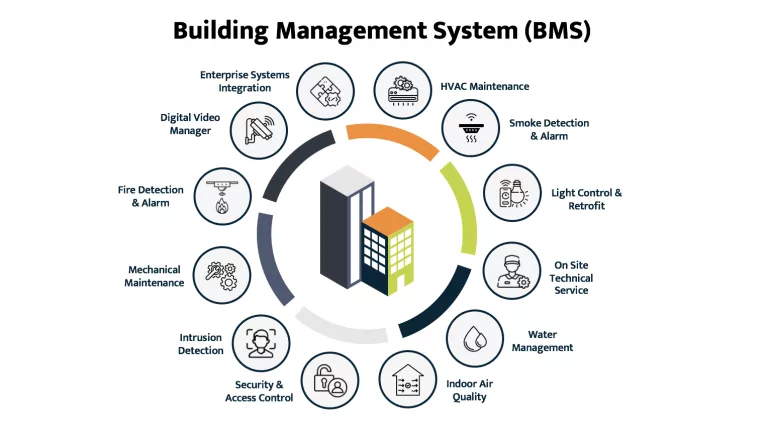
What Is Smart Building Automation?
Understanding smart building automation systems starts with recognising how they bring intelligence, efficiency, and control into modern buildings. These systems integrate technologies such as sensors, software, and connected devices to automatically manage lighting, heating, ventilation, air conditioning (HVAC), security, and energy usage. Instead of relying on manual controls, smart building automation systems collect real-time data and respond dynamically to occupancy, environmental conditions, and usage patterns. For you, this means lower energy costs, improved comfort, enhanced safety, and more sustainable operations, whether the building is residential, commercial, or industrial. By centralising control and enabling automation, smart building systems transform traditional structures into responsive, data-driven environments designed to adapt to the people who use them.
For commercial property owners and facility managers, this means lower energy costs, improved comfort, enhanced safety, and more sustainable operations. By centralising control and enabling automation, smart building systems transform traditional structures into responsive, data-driven environments.
The Role of Automation in Commercial Building Management in London
Automation is a cornerstone of Building Management Systems, transforming how commercial properties are managed. By integrating various building systems into a single platform, automation allows for seamless communication between different components. For example, when a fire alarm is triggered, the BMS can automatically unlock emergency exits, turn on emergency lighting, and notify security personnel—all without human intervention.
This level of coordination is vital for ensuring safety and compliance with regulations. Furthermore, automation in BMS contributes to significant cost savings over time. By optimising energy use through automated controls, businesses can reduce their utility bills substantially.
For instance, smart thermostats can learn occupancy patterns and adjust heating or cooling accordingly, leading to lower energy consumption during off-peak hours. This not only benefits the bottom line but also aligns with sustainability goals by reducing the carbon footprint of commercial properties. For more information, visit E.ON Energy.
Smart Building Automation Solutions for Commercial Projects
Create smarter, safer, and more efficient spaces with advanced building automation solutions designed for modern projects. From commercial environments to residential living, building automation enhances comfort, reduces energy consumption, and elevates user experience — all through intelligent, connected control.
As a proud partner of Lexone, we deliver reliable, future-ready automation technologies that scale with your needs.
Intelligent Building Automation for Projects of All Kinds
Create smarter, safer, and more efficient spaces with advanced building automation solutions designed for modern projects. From commercial environments to residential living, building automation enhances comfort, reduces energy consumption, and elevates user experience — all through intelligent, connected control.
As a proud partner of Lexone, we deliver reliable, future-ready automation technologies that scale with your needs.
The benefits of Building Management Systems for commercial enterprises are manifold. Firstly, they enhance operational efficiency by streamlining processes and reducing manual tasks. This leads to lower labour costs and allows staff to concentrate on higher-value activities that contribute to business growth.
Additionally, BMS facilitate better resource management by providing real-time data on energy usage and system performance, enabling informed decision-making. Another significant advantage is the improvement in tenant satisfaction and retention rates. A well-maintained building with optimal environmental conditions creates a positive experience for occupants.
Features such as responsive climate control and effective lighting contribute to a comfortable working environment, which can enhance employee morale and productivity. Furthermore, businesses that prioritise sustainability through efficient building management are often viewed more favourably by clients and stakeholders, bolstering their reputation in the marketplace.
Smart Security for Commercial Buildings
From advanced access control to real-time visitor management, modern smart systems give business owners peace of mind while streamlining daily operations. Here’s how:
With a high-definition video intercom, you can see and speak with anyone at your front door or main entrance. Whether you’re at your desk, in a meeting, or on-site, you can respond immediately through the app on your smartphone or tablet.
Remote Access from Anywhere
Even if you’re away from the building, the app lets you connect to your intercom. Screen visitors, answer questions, or grant access remotely, all from your mobile device. If you’re unavailable to speak directly with a visitor, you can use the app to play a predefined message. This feature ensures professional communication without delay, perfect for busy commercial environments.
Visitor History and Access Logs
Every time someone rings your doorbell or uses the keypad, the system can take a photo and log the visit. From the app, you can quickly review recent visitor history, track who entered, and monitor access times—a critical feature for security and accountability.
Instant Notifications on Your Device
Never miss a visitor again. Whether you’re in the building or halfway across town, the app sends real-time notifications whenever someone rings the doorbell.
Keypad and Fob Reader for Easy Alarm Control
For secure and convenient access, employees or authorised personnel can disarm alarms using either a unique pincode or a secure fob. This eliminates the need for manual keys and adds an extra layer of security for your commercial property.
Benefits of Building Management Systems for Commercial Enterprises
| Benefits of Building Management Systems for Commercial Enterprises |
|---|
| 1. Energy Efficiency |
| 2. Cost Savings |
| 3. Improved Comfort and Productivity |
| 4. Remote Monitoring and Control |
| 5. Equipment Maintenance and Longevity |
| 6. Compliance with Regulations |
Energy Efficiency with Building Management Systems
Maximising energy efficiency is one of the primary objectives of Building Management Systems. These systems employ various strategies to monitor and control energy consumption across all building operations. For instance, they can utilise occupancy sensors to adjust lighting levels based on whether rooms are occupied or vacant.
This not only conserves energy but also reduces wear on lighting systems, leading to lower maintenance costs. Additionally, BMS can integrate renewable energy sources such as solar panels into the building’s energy management strategy. By intelligently managing when to draw power from the grid versus when to utilise stored solar energy, businesses can further reduce their reliance on non-renewable resources.
This holistic approach not only enhances energy efficiency but also supports corporate sustainability initiatives, making it an attractive proposition for environmentally conscious enterprises.
Building Management Systems on Commercial Property Maintenance
The impact of Building Management Systems on commercial property maintenance cannot be overstated. By providing real-time monitoring and alerts for system malfunctions or inefficiencies, BMS enable proactive maintenance strategies that prevent costly downtime. For example, if a chiller unit begins to operate outside its normal parameters, the BMS can notify maintenance staff immediately, allowing them to address the issue before it leads to a complete failure.
Moreover, BMS facilitate better planning for maintenance schedules by analysing historical data on system performance. This predictive maintenance approach allows property managers to anticipate when equipment is likely to require servicing or replacement, thereby minimising unexpected breakdowns and extending the lifespan of critical systems. As a result, businesses can maintain high operational standards while reducing overall maintenance costs.
Areas of Application for Building Automation
Building automation brings intelligence and efficiency to a wide range of environments. Explore how it transforms different types of buildings:
Office and Business Premises
Boost productivity, reduce operating costs, and create a comfortable workplace with automated HVAC, lighting, access control, and energy management.
Hospitality
Deliver exceptional guest experiences with automated room controls, lighting scenes, climate optimization, and smart energy-saving features tailored for hotels and hospitality spaces.
Ambient Assisted Living
Support independence and safety with integrated automation solutions for seniors and individuals with special needs, including monitoring, lighting, security, and climate control.
Apartments & MDUs
Enhance modern living with connected home technology across multi-dwelling units — scalable automation for convenience, security, and energy efficiency.
Prefab Houses
Integrate smart control systems into prefab designs from day one for seamless energy management, lighting automation, and turnkey smart-home readiness.
Special Applications
From educational facilities to industrial spaces, tailor-made automation systems bring intelligence to unique environments with custom control functions and scalable integrations.
Smart Building Automation Across London
We design and install smart building automation and management systems for commercial properties across London. Our team works with offices, hospitality venues, retail spaces, and multi-use developments throughout the city including the City of London, Canary Wharf, Mayfair, Westminster, Islington, Hackney, Southwark, Hammersmith, Kensington, Camden, and the wider Greater London area.
Based near Cricklewood, we are ideally positioned to serve Central and North London with fast response times and on-site support.